

They Can Miss Home AND Love College: What Every Parent Should Know About Homesickness
Thoughts for parents and students as college move-in day approaches
Guest contribution by Tanya Hanrihan, LMFT
Auburn-area mother of two college-aged daughters
A Note From Alexandra
There are certain moments in parenting that you know are coming for years, yet somehow they still arrive before you are ready. Sending a child off to college is one of them.
Here in the Auburn area, this is the time of year when many families are surrounded by dorm-room shopping lists, boxes in the hallway, last-minute Target runs, and the growing realization that move-in day is suddenly very close.
Recently, Auburn-area mom and licensed marriage and family therapist Tanya Hanrihan shared something about this transition that I thought was too important not to pass along. Tanya is the mother of two college-aged daughters — one a senior at Cal Poly and the other preparing to begin her freshman year — so she is experiencing this transition not only professionally, but personally.
What especially stayed with me was one simple piece of advice: talk to your children about homesickness before they become homesick.
With Tanya’s permission, I’m sharing her perspective here because I think there are parents — and probably some soon-to-be college students — who need to hear it before those cars are packed and pointed toward campus.
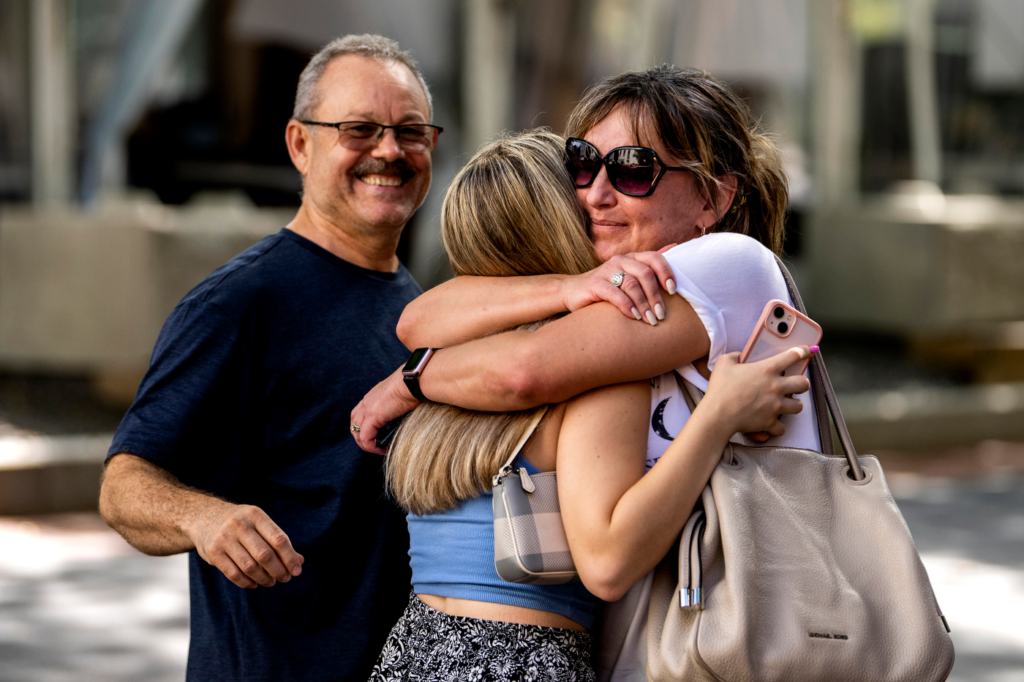
Talk About Homesickness Before They Are Homesick
As we approach move-in week and hallways and front-door spaces begin filling with boxes, Tanya encourages parents to have one important conversation with their kids before they leave: talk about homesickness before homesickness arrives.
Let them know there may be moments when they feel anxious, unsettled, lonely, irritable, or experience an intense longing for home.
They may miss their parents. They may miss their siblings, pets, friends, bed, favorite foods, familiar routines, or simply the feeling of being somewhere they are completely known.
And perhaps most importantly, remind them that those feelings are normal.
Homesickness Does Not Mean They Chose the Wrong School
Feeling homesick does not mean a student chose the wrong college. It does not mean they weren’t ready to leave home. It does not mean everyone else is adjusting better than they are. And it does not automatically mean they should come home.
A student can be incredibly excited about where they are and still desperately miss home.
Both things can be true at exactly the same time. As Tanya puts it, sometimes life isn’t an either/or. It’s an AND.
Why Can Homesickness Feel So Intense?
Tanya’s professional perspective adds another important layer to the conversation. What students experience as homesickness isn’t necessarily limited to emotionally “missing home.” Such a dramatic transition can affect their sense of regulation, familiarity, safety, and connection.
For most of their lives, our children have been surrounded by familiar people, places, routines, sounds, smells, foods, pets, and rhythms. Those seemingly ordinary things can become powerful cues of comfort, connection, and belonging.
They are sleeping in a different bed, sharing a room with someone they may barely know, navigating an unfamiliar campus, eating different food, managing their own schedule, meeting hundreds of new people, and functioning without many of the relationships and routines that have grounded them throughout their lives.
That’s an enormous amount of change for anyone.
Home Isn't Just a Place
One of Tanya’s observations that I found particularly meaningful is that a homesick student isn’t simply missing a location called home.
They may be missing an entire network of people, relationships, routines, sensory experiences, and familiar rhythms that have quietly communicated something to them throughout their lives: This is where I belong. This is where I feel safe.
When they arrive at college, they begin the process of building that sense of familiarity and belonging all over again.
For some students, it happens surprisingly quickly. For others, it takes weeks or months. Neither student is doing college “wrong.”
Homesickness Doesn't Always Look Like “I Miss Home”
Homesickness can show up in unexpected ways. A student might experience anxiety, irritability, restlessness, trouble sleeping, difficulty eating, tearfulness, exhaustion, withdrawal, or an almost physical ache to go home.
This is another reason Tanya believes normalizing homesickness before students leave is so important.
When those feelings arrive unexpectedly, a student may interpret them as information: “I feel awful. Maybe I chose the wrong school. Maybe I shouldn’t be here.”
For some students, it happens surprisingly quickly. For others, it takes weeks or months. Neither student is doing college “wrong.”
But if they have already talked about homesickness, they may be better able to recognize what they’re experiencing: “I’m adjusting to an enormous amount of change. I miss what I know. I can feel this way right now and still be okay here.”
Why “Get Involved” Is More Important Than It Sounds
Every incoming college student seems to hear the same advice: Get involved.
It can sound like a cliché, but from the perspective Tanya describes, involvement has a much deeper purpose. New relationships, activities, routines, and familiar faces help students begin establishing a sense of connection and belonging in their new environment.
Sports, yoga, singing, dancing, clubs, shared meals, study groups, intramural teams, outdoor activities — even simply having somewhere to go at the same time each week can help.

These activities aren’t merely distractions from missing home. They are opportunities to establish new rhythms, relationships, routines, and eventually a new sense of familiarity.
In other words: get out of the dorm room.
Learn When Homesickness Shows Up
Tanya also suggests encouraging students to notice whether their homesickness follows a pattern.
Maybe Sunday evening is difficult because that was always family dinner night. Maybe Friday night feels particularly lonely because friends at home used to gather then. Maybe talking to a sibling or seeing the family dog on FaceTime triggers an unexpected wave of emotion.
Once students recognize those patterns, they can plan for them.
Sunday evening might become dinner with new friends, a study group, a workout class, a club meeting, or even a sunset somewhere with people they’re beginning to know.
Little by little, those new experiences begin becoming familiar too.
Don't Forget the Basics
Sleep, nutrition, exercise, and routine matter tremendously during periods of transition. When those foundations begin falling apart, everything else can feel harder.
And if homesickness becomes overwhelming or a student is struggling to eat, sleep, attend class, socialize, or function normally, encourage them to reach out for professional support. College counseling and student-support services exist precisely because transitions like these can be difficult.
The Hard Part for Parents
Then there is the other side of this transition: us.
When your child calls home crying and says, “I want to come home,” nearly every parental instinct tells you to make the pain disappear.
But perhaps our job isn’t always to remove the discomfort.
Sometimes our job is to listen. To remind them that missing home is real without treating the feeling as an emergency. To remind them that they can miss us terribly and still stay. They can be uncomfortable and still be okay. They can love home deeply and still begin building a life somewhere else.
From Empty Nesters to “Bird Launchers”

Tanya is going through this transition herself. With one daughter already a senior at Cal Poly and another beginning her freshman year, she and her husband are about to officially become what most people call “empty nesters.”
Tanya has a much better name for it: “bird launchers.”
She describes the first launch as hard. This one feels harder.
I think a lot of parents will understand exactly what she means.
Maybe Parents Need to Remember the AND, Too
There is something about Tanya’s idea of the “AND” that applies just as much to parents as it does to our children.
We can be incredibly proud AND incredibly sad.
We can be excited to watch them discover who they are AND wish they would stay home a little longer.
We can know that launching them into independent adulthood is exactly what we’ve spent years preparing them for AND still stand in their suddenly quiet bedroom wondering how all those years went by so quickly.
A Final Thought From Alexandra

This particular transition feels especially close to my heart because I am preparing for a version of it in my own family. I have identical twins who have spent their entire lives side by side, and now they are getting ready to embark on different paths.
For the first time, they won’t be experiencing the same milestones at the same time or coming home at the end of the day to share the same stories. They will be building separate routines, meeting different people, having experiences the other wasn’t there to witness, and beginning to discover who they are as individuals outside of the identity they have always shared as twins.
As their mom, there is something incredibly exciting about watching that happen — and something a little heartbreaking about it, too. They aren’t only leaving the familiarity of home. In many ways, they are also leaving the familiarity of each other.
I find myself wondering what that separation will feel like for them. When you’ve had someone beside you from the very beginning — someone who understands your history without needing it explained — learning to navigate life independently is an especially significant kind of launch.
And maybe that is why Tanya’s reminder about the “AND” resonates so deeply with me. My girls can miss home AND be excited about what comes next. They can miss each other AND love the independence of their separate lives. They can remain incredibly close AND begin becoming more distinctly themselves.
And I suppose the same is true for me. I can be unbelievably proud of the young women they are becoming AND wish I could slow everything down just a little bit.
For all of us parents preparing for a launch this year — whether it’s your first child, your last, or, like me, two children beginning different journeys — perhaps our job isn’t to hold on tighter. It’s to make sure they know exactly where home is, and then give them the confidence to find out where their own paths can take them.
May we give them strong roots, the courage to fly, and the freedom to become exactly who they are meant to be.
With gratitude to Tanya Hanrihan, LMFT, for sharing the original thoughts and perspective that inspired this article. Tanya is an Auburn-area mother of two college-aged daughters, and her insight into homesickness, connection, and the transition to college provided the foundation for this piece.