
The Engineering Experiment Hidden in Auburn: The Remarkable Story of Rock Creek Dam
Just a few miles from downtown Auburn stands a century-old structure so unusual that historians consider it the only known surviving example of its kind.
When people talk about Auburn’s history, the conversation usually begins with gold. We hear about Claude Chana, Auburn Ravine, Old Town and the miners who arrived in the foothills in 1848. But a few miles north of downtown Auburn stands another piece of history—one that has less to do with gold and more to do with an extraordinary engineering experiment.
The dam most Auburn residents have never heard about
Rock Creek Dam was constructed by Pacific Gas and Electric Company in 1916, during an ambitious period of hydroelectric development in Northern California. From a distance, it may appear to be a modest concrete structure. In reality, it represents a rare and almost forgotten chapter in American engineering history.
The dam is approximately 3.5 miles north of Auburn. PG&E built it in 1916 as part of the Drum-Spaulding hydroelectric system.
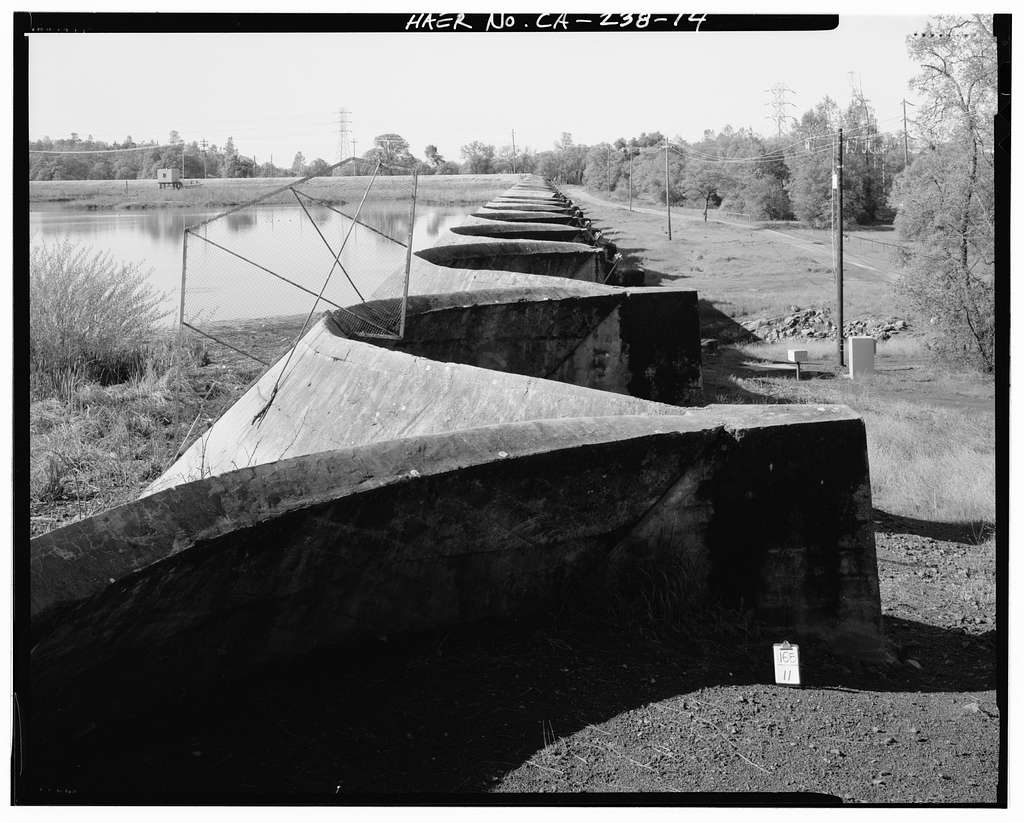
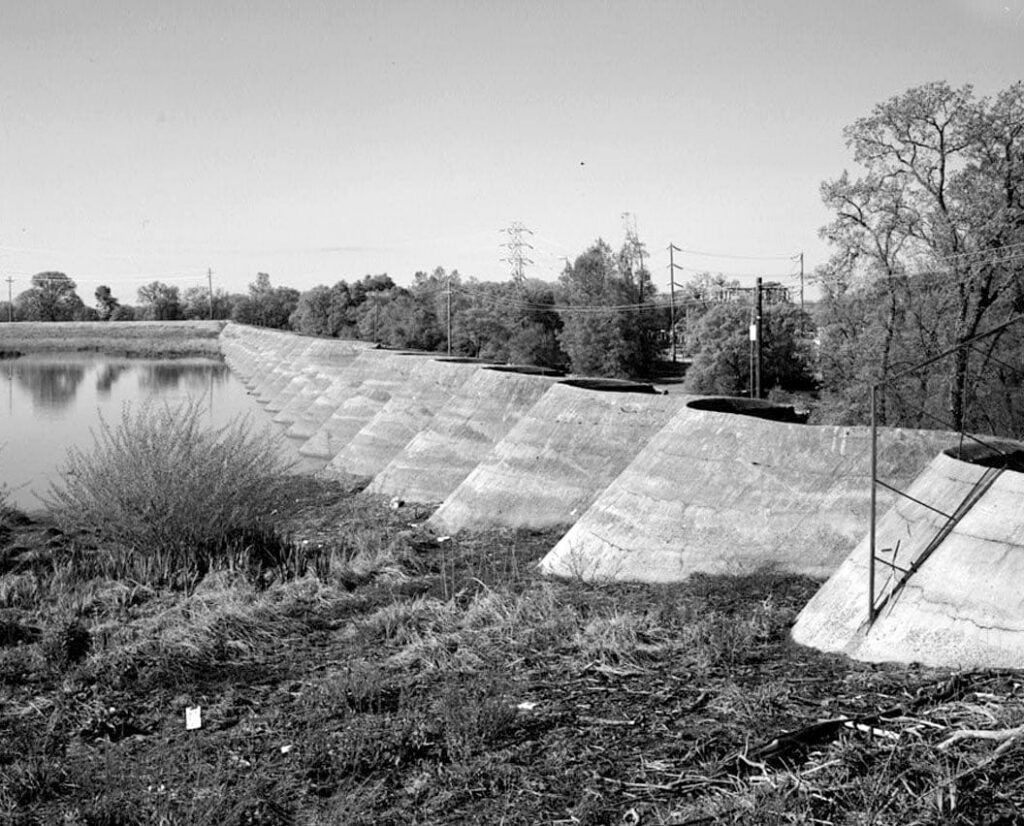
According to documentation prepared for the National Park Service’s Historic American Engineering Record, Rock Creek Dam is the only known double-hinged multiple-arch dam in California. At the time the report was prepared, it was also considered the only surviving unaltered, unfixed hinge dam in the western United States.
What makes the design so unusual?
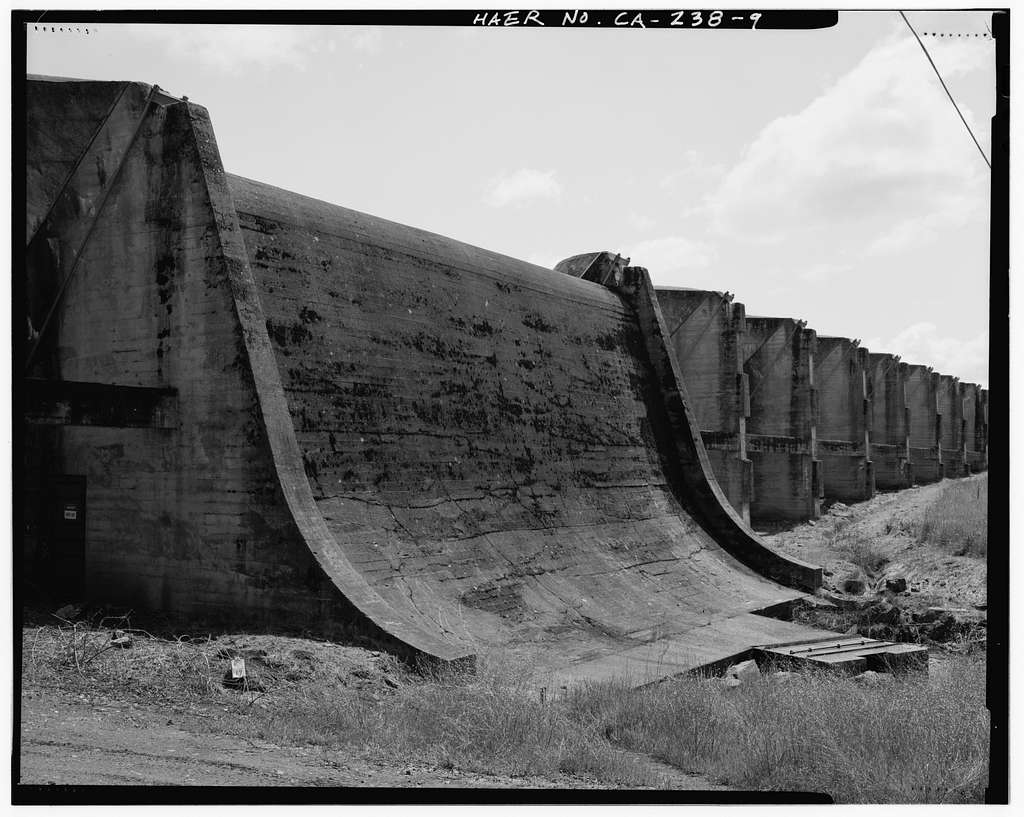
Most dams rely on mass—the immense weight of concrete or earth—to resist the pressure of the water behind them. Rock Creek Dam used a different strategy. It was constructed as a series of 34 thin concrete arches supported by angled buttresses. Each arch spans approximately 30 feet, creating a structure more than 1,000 feet long.
The truly experimental feature was hidden where each arch met its supporting buttress. Engineers incorporated hinge-like joints that allowed the arches a small degree of independent movement. The theory was that the arches could adjust to temperature changes, shifting loads and variations in water pressure without developing cracks where the concrete sections met.
It was an innovative idea, but it was also short-lived. Later inspections suggested that the arches did not move enough to justify the added complexity. The double-hinge concept was apparently never used again, leaving Auburn with what may be the sole surviving example of this particular engineering experiment.
Auburn was becoming part of California’s electrical future
Rock Creek Dam was not built primarily to supply drinking water or control floods. It formed part of an elaborate hydroelectric network that moved water from high in the Sierra Nevada through reservoirs, canals, tunnels and powerhouses, using the same water repeatedly to generate electricity as it descended toward the Sacramento Valley.
Water reaching Rock Creek Reservoir had already traveled through other portions of the system and helped generate electricity upstream. The dam stored and regulated that water before releasing it toward the Wise Powerhouse. In this way, a quiet site outside Auburn became one link in a much larger system that helped electrify Northern California.
Once celebrated as the longest of its kind
When Rock Creek Dam was completed, engineers did not regard it as an obscure local project. At approximately 1,050 feet in its original documented length, it was celebrated in contemporary technical publications as the longest multiple-arch dam ever constructed.
Construction itself was remarkably hands-on. Workers pushed small rail cars filled with concrete across a temporary trestle built above the dam. Concrete was then poured through chutes into the buttress forms, followed by long continuous pours for the arches. By February 1917, the completed structure was already holding water.
A structure that survived changing ideas about dam safety
California’s attitude toward dam design changed dramatically after the catastrophic failure of the St. Francis Dam in Southern California in 1928. Multiple-arch dams throughout the state received new scrutiny, and Rock Creek Dam began undergoing regular state inspections in 1930.
Despite its unconventional design, the dam remained remarkably intact. Steel tension rods were added to portions of the structure in 1966, but the Historic American Engineering Record estimated that between 95 and 100 percent of its original historical fabric remained in place when the dam was studied.
Why this Auburn story matters
Rock Creek Dam is a reminder that Auburn’s historical importance did not end with the Gold Rush. The community also sat at the crossroads of California’s transition into the modern age—when engineers were learning how to move water across mountains, transmit electricity over long distances and build infrastructure on a scale previously unimaginable.
It is also a perfect example of how easily important history can hide in plain sight. Auburn residents may drive near Rock Creek, walk in the surrounding countryside or hear references to the reservoir without realizing that the concrete arches nearby preserve an engineering idea that existed for only a few years.
Gold may have created Auburn, but innovation helped carry it into the 20th century. Rock Creek Dam stands as a quiet monument to that second chapter: bold, experimental and almost entirely unknown.
One of the things I love most about living and working in Auburn is discovering the stories that still shape the land around us. Our historic buildings, waterways, trails and neighborhoods are not simply attractive places to live—they are part of a much larger California story. If you know of another overlooked piece of Auburn history, I would love to hear about it.