
Western States 100:
The Legendary Run That Brings the World to Auburn
Every June, Auburn becomes more than a charming Gold Country town. It becomes the finish line for one of the most iconic endurance events in the world: the Western States 100-Mile Endurance Run.
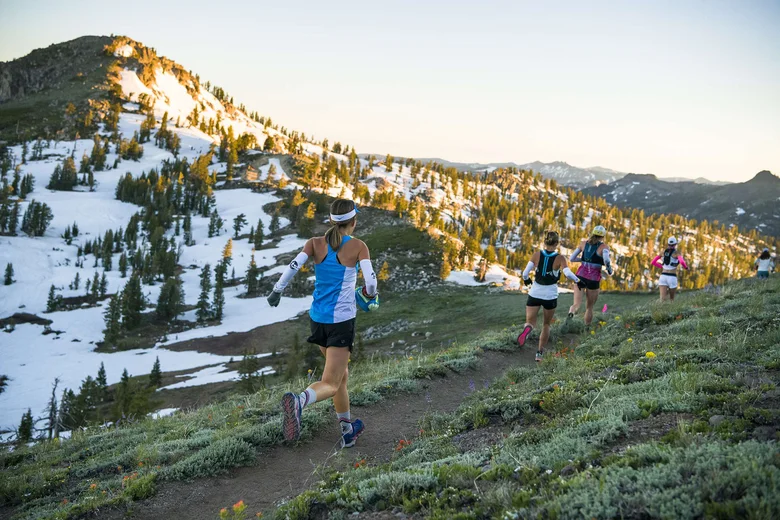
This weekend, runners from around the globe will begin their journey in Olympic Valley near Palisades Tahoe and make their way across the Sierra Nevada, through rugged canyons, historic trails, river crossings, heat, darkness, exhaustion, and finally into Auburn, where the race ends inside the track at Placer High School.
A Race Rooted in History
The Western States 100 is widely recognized as the world’s oldest 100-mile trail race, but its roots go back even further than running. The route grew out of the historic Western States Trail, a trans-Sierra route once traveled by Native peoples, miners, settlers, riders, endurance athletes, and generations of people connected to the Sierra Foothills.
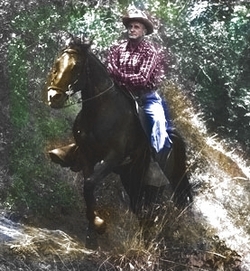
In 1955, Wendell T. Robie and a small group of horsemen proved that a horse could travel the 100-mile distance from the Tahoe area to Auburn in one day. That ride became the legendary Tevis Cup, still one of the most respected endurance horse races in the world.
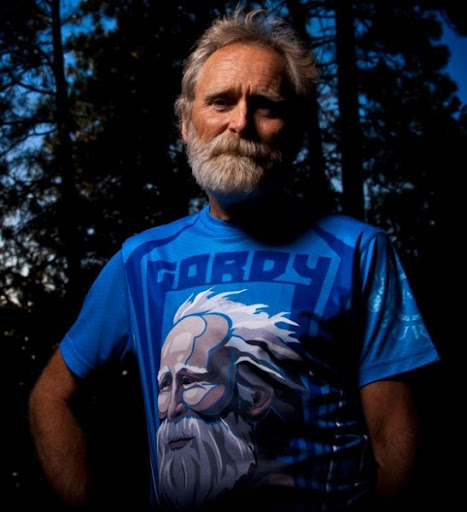
The running version began with an almost unbelievable challenge. In 1974, Gordy Ainsleigh set out on foot alongside the horses to prove that a person could cover the same rugged 100-mile trail within the 24-hour time limit. He did it, reaching Auburn in 23 hours and 42 minutes, and in doing so helped launch what would become the Western States Endurance Run.
By 1977, the first official Western States Endurance Run was held. Only three runners finished that year. Today, the race attracts elite ultrarunners, determined first-timers, international athletes, crews, pacers, families, volunteers, and spectators who all come together for one unforgettable weekend
From
Palisades
Tahoe
to
Auburn
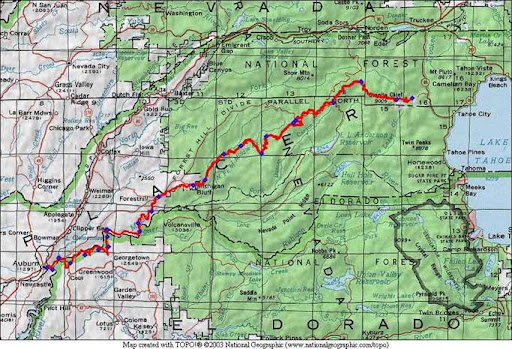
The course begins in the high country at Olympic Valley near Palisades Tahoe, where runners immediately climb toward Emigrant Pass. From there, they travel west across remote mountain terrain, old-growth forest, historic mining areas, steep canyons, and the Foresthill Divide.
The route is beautiful, but it is not gentle. Runners face major climbs, punishing descents, summer heat, cold high-elevation conditions, and long stretches of remote trail where access is limited. Much of the course can only be reached by foot, horse, or helicopter.
One of the most dramatic sections comes near mile 78 at Rucky Chucky, where runners cross the Middle Fork of the American River. From there, they climb toward Green Gate, continue through the Auburn State Recreation Area, cross the historic No Hands Bridge, and make the final push through Robie Point into Auburn.
For Auburn residents, one of the most moving traditions is watching runners come down the final streets toward Placer High School. Some arrive in the dark of night, chasing silver buckles. Others arrive Sunday morning during the famous “Golden Hour,” when every second matters and the community roars them toward the finish before the 30-hour cutoff.
Top Runners to Watch This Year
This year’s field is stacked with some of the most accomplished ultrarunners in the world. On the men’s side, notable names include Kilian Jornet, Jim Walmsley, Adam Peterman, Hans Troyer, Daniel Jones, Ryan Montgomery, Hiroki Kai, and Francesco Puppi.
Kilian Jornet is one of the most famous mountain athletes in the world and returns as a major name to watch. Jim Walmsley, a four-time Western States champion and course record holder, brings deep experience on this specific trail. Adam Peterman, the 2022 winner, is also back in the conversation, making the men’s race especially compelling.
On the women’s side, the field is equally exciting. Abby Hall returns after a standout 2025 performance, joined by athletes such as Fuzhao Xiang, Marianne Hogan, Emily Hawgood, Martyna Młynarczyk, Tara Dower, Jennifer Lichter, Molly Seidel, and Yngvild Kaspersen.
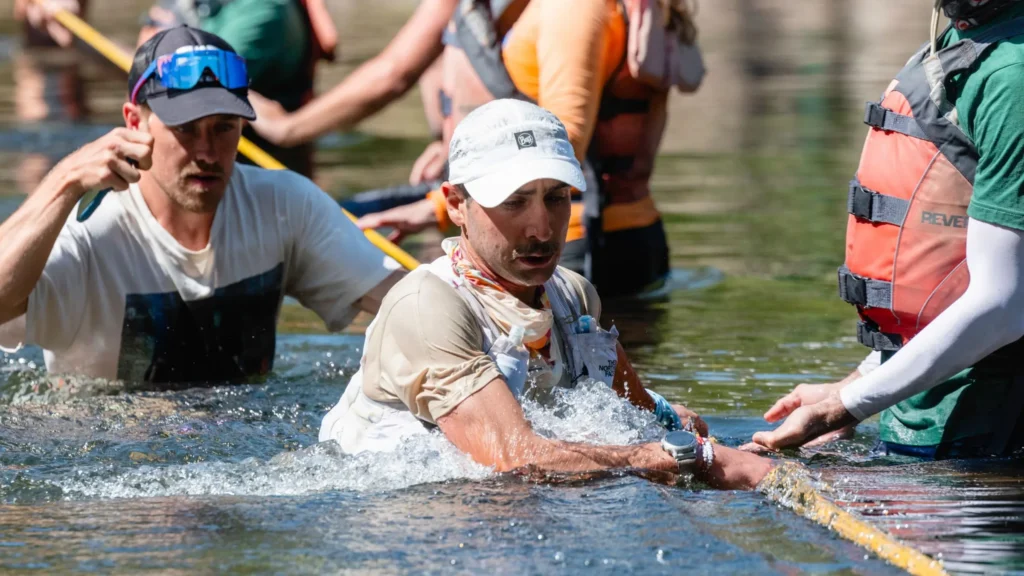
What makes Western States so interesting is that it is never simply about who is fastest on paper. The course has a way of testing every assumption. Heat, nutrition, pacing, foot care, canyon climbs, river crossings, and the ability to stay mentally steady through the night all matter. Western States rewards courage, patience, experience, and the ability to keep moving when the body wants to stop.
Auburn’s Role: More Than a Finish Line
For Auburn, Western States is not just a race that ends here. It is part of the town’s identity.
Auburn is known as the Endurance Capital of the World, and Western States is one of the reasons that title feels so deeply earned. The race brings together everything that makes this area special:
- HISTORIC TRAILS
- RIVER CANYONS
- OUTDOOR ADVENTURE
- COMMUNITY SPIRIT

The finish at Placer High School is one of the most emotional scenes in endurance sports. Families wait through the night. Crews track every mile. Volunteers keep the finish area moving. Locals cheer for people they have never met. And runners, many of whom have spent years trying to earn a place at the starting line, finally step onto the track in Auburn.
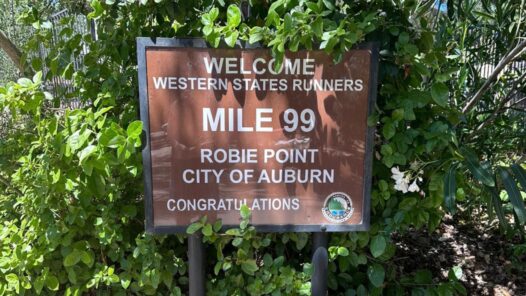
That moment says something about this community. Auburn shows up. It shows up for the elite runner breaking records, and it shows up just as loudly for the final finisher fighting to beat the clock.
The Volunteers Who Make It Possible
Western States could not happen without volunteers. Aid stations, medical teams, radio operators, trail crews, river crossing support, finish line crews, food service, transportation, and countless behind-the-scenes helpers all make the race possible.
Many volunteers spend more time on the course than the runners themselves. They work through heat, dust, darkness, fatigue, and long hours because they understand the spirit of the event. In many ways, Western States is as much a community effort as it is an athletic competition.

For visitors coming into Auburn this weekend, that volunteer culture is one of the clearest examples of what makes the Foothills different. People here care about the trails, the history, the athletes, and the shared experience of being part of something larger than themselves.
Why Western States Matters to Auburn
Events like Western States remind us that Auburn is not just a place to live. It is a place with story, texture, grit, and identity.
This is a town where historic Gold Rush streets meet world-class trails. Where the American River Canyon sits just minutes from downtown. Where runners, riders, hikers, cyclists, families, business owners, and volunteers all share the same landscape in different ways.
For those of us who live here, Western States weekend is a reminder of what makes Auburn so extraordinary. It brings international attention to our small town, but it also reflects something very local: a community that values endurance, generosity, open space, and connection.
Whether you are watching at Foresthill, cheering from Robie Point, standing near No Hands Bridge, or waiting at the Placer High School track, Western States is worth experiencing at least once. It is dramatic, emotional, historic, and uniquely Auburn.
Final Thoughts
The Western States 100 is more than a race from Palisades Tahoe to Auburn. It is a living piece of California history, a test of human endurance, and one of the most powerful examples of community support in the Sierra Foothills.
This weekend, as runners make their way through the mountains and canyons toward Placer High School, Auburn will once again become the place where exhaustion meets triumph.
And that is exactly why Western States belongs here.